
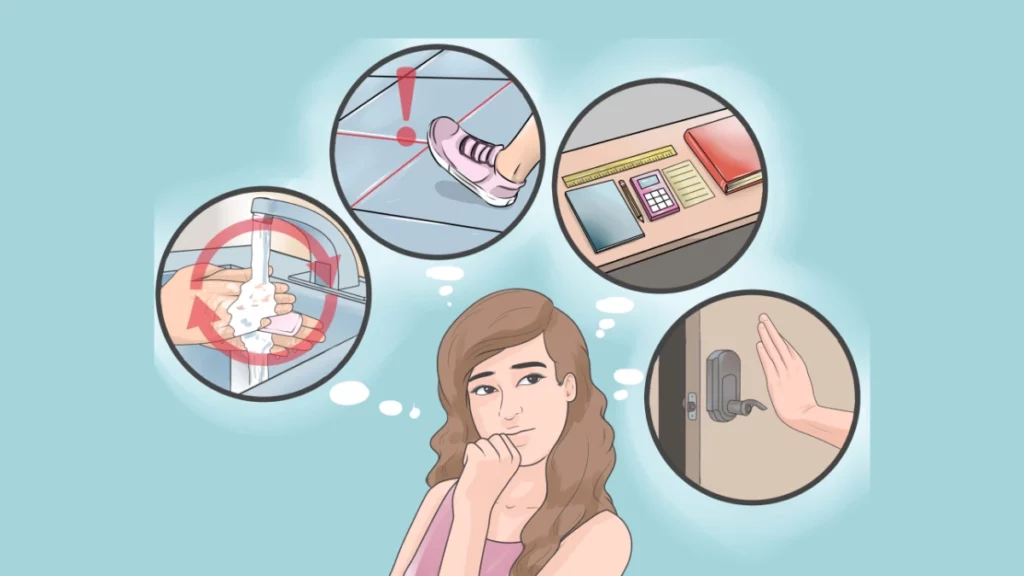
In everyday life we sometimes check twice to make sure a door is locked, or wash our hands more than usual. But when behaviours like these turn into a mental health difficulty that makes life harder, Obsessive-Compulsive Disorder (OCD) may be involved.
OCD is characterised by distressing thoughts that enter the mind involuntarily (obsessions) and repetitive behaviours carried out to suppress those thoughts (compulsions). The person cannot stop performing these behaviours, and experiences intense anxiety when they don’t. Over time this cycle can seriously affect the person’s social life, working life and mental health.
What Is an Obsession?
An obsession is an unwanted, distressing and irrational thought, urge or image that keeps entering the person’s mind involuntarily. The person is aware that these thoughts are irrational, yet struggles to hold them back.
Common types of obsession:
-
Cleanliness: Intense anxiety about contamination by germs, dirt or illness
-
Checking: A constant need to check lights, doors and stoves
-
Religious thoughts: Fear of being sinful, worry about harming religious values
-
Causing harm: Fear of harming loved ones
-
Sexual thoughts: Feeling guilty over inappropriate or taboo thoughts
-
Symmetry and order: A compulsion for objects to be arranged in a particular order
These thoughts become fixations in the person’s mind and create great distress.
What Is a Compulsion?
A compulsion is a repetitive behaviour or mental act performed to reduce the anxiety caused by obsessions or to prevent something bad from happening. Although these behaviours provide short-term relief, over time they become more frequent and more intense.
Common examples of compulsions:
-
Washing the hands constantly
-
Checking doors and windows over and over
-
Counting in certain numbers, praying
-
Arranging objects symmetrically
-
Constantly correcting writing and words
Even though the person often knows these behaviours are irrational, they cannot stop performing them; otherwise they experience intense anxiety.
What Are the Symptoms of OCD?
The symptoms of OCD can vary from person to person, but the following are generally observed:
-
Obsessions and behaviours that take up more than an hour of the day
-
Disruption of work and social life
-
Anxiety, restlessness and feelings of guilt
-
Being unable to stop obsessions despite recognising that they are irrational
-
A lack of any sense of satisfaction despite repeating the behaviours again and again
OCD usually begins in adolescence and young adulthood, but it can also appear in childhood or later in life. In some people, stressful life events can trigger the disorder.
What Causes OCD?
Although the exact cause of Obsessive-Compulsive Disorder is not known, certain biological, genetic and environmental factors are thought to play a role:
-
Genetic predisposition: The risk may increase if there is a family history of OCD.
-
Brain chemistry: A serotonin imbalance plays an important role in OCD.
-
Brain structure: Functional differences have been identified in certain areas of the brain.
-
Environmental factors: Traumatic experiences, stressful events or childhood experiences can act as triggers.
It can also occur alongside other conditions in some people, such as depression, anxiety disorder or eating disorders.
Can OCD Be Treated? Is Online Therapy Effective?
Yes, OCD is a treatable mental health condition. With appropriate therapy and, if necessary, medication, the symptoms can be reduced to a great extent.
Treatment Methods:
-
Cognitive Behavioural Therapy (CBT):
It is one of the most effective forms of therapy. In particular, with the Exposure and Response Prevention (ERP) technique, the person is exposed to their obsessions in a controlled way and prevented from carrying out the compulsive behaviour, which helps them develop skills for coping with anxiety.
-
Medication:
SSRI antidepressants prescribed by a psychiatrist can help reduce the severity of obsessions and the accompanying anxiety.
-
Online Therapy:
Today, many people struggle to reach therapy in terms of time or location. Online therapy removes these barriers and allows the person to receive support within their own comfort zone. Research shows that online therapy is just as effective as face-to-face therapy, particularly for OCD.
Break Free from the Shadow of Obsessions with Online Therapy
Obsessive-Compulsive Disorder is not merely a “fixation”; it is a serious mental health condition that lowers quality of life and drains time and energy. Yet with the right support it can be brought under control and even become manageable.
🎯 As Psychologist Nilay Özkan, drawing on over 10 years of clinical experience, I offer professional support through individual online therapy to clients experiencing OCD symptoms.
🧠 If you too are struggling to cope with obsessive thoughts and behaviours, you are not alone. Together, through online therapy, we can break this cycle.
👉 Request an online session and give your life a healthier direction.