
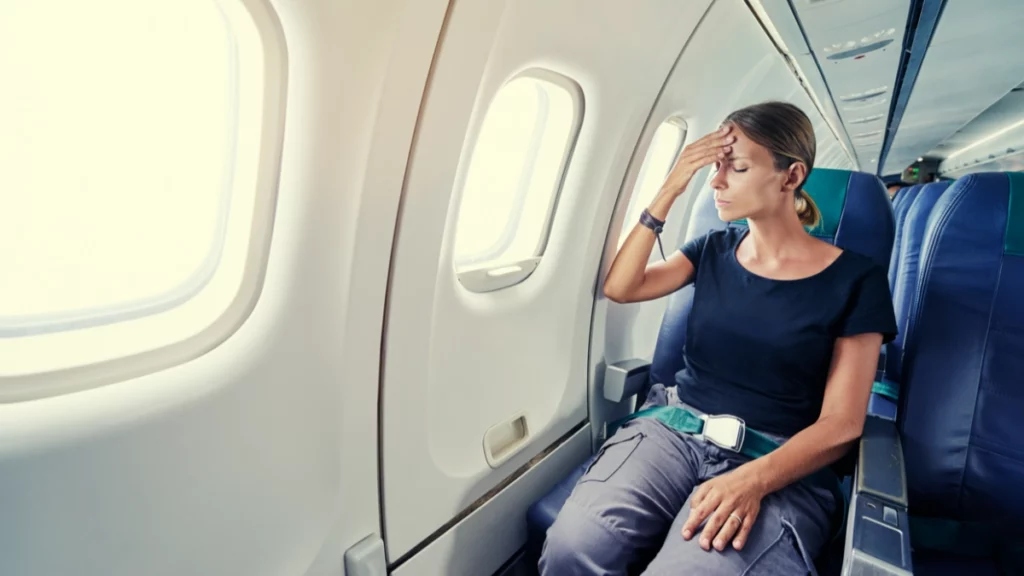
Fear of flying is a common anxiety problem that causes many people to postpone or completely cancel their travel plans. Even though they logically know that planes are safe, a person can experience intense fear, panic and a sense of losing control before or during a flight. This can seriously affect not only freedom to travel but also a person’s work, social and private life. Fear of flying is usually related to a sense of losing control, a negative flight experience in the past, a history of panic attacks or a general level of anxiety. Fortunately, this fear is not “destiny.” With the right methods and psychological support, fear of flying can be greatly reduced and even completely overcome.
What Is Fear of Flying and Who Experiences It?
Fear of flying is a state in which a person experiences intense anxiety, fear and panic when they think about travelling by plane or when they board a plane. This fear may not be limited to the moment of the flight; in some people it can show itself with physical and mental symptoms that begin days or even weeks beforehand. In psychology, fear of flying is often evaluated under the heading of specific phobia and is also called “aviophobia.” This fear can be seen in every age group, but it is more common especially in people with high anxiety levels, individuals with a strong need for control and people who have previously had a panic attack. In addition, experiences such as previously experienced turbulence, an emergency landing or intense fear felt during a flight can play a role in the development of fear of flying. Some people, on the other hand, may develop this fear despite never having had a negative flight experience, because of news they have heard or images they have watched. A significant proportion of individuals who experience fear of flying actually know that planes are safe. But the problem is not a lack of information; it is the conflict between the emotional brain and the logical brain. For this reason, a person may express thoughts such as “I know it’s irrational, but I can’t stop it.” Fear of flying is a treatable condition, and with the right psychological approaches a person’s flight-related anxiety can be significantly reduced.
Why Does Fear of Flying Happen? Psychological and Emotional Causes
Fear of flying is often not linked to a single cause; it usually arises from a combination of more than one psychological and emotional factor. One of the most common causes is that a person has to give up control completely during a flight. In individuals with a high need for control, this can create intense anxiety, and the brain can go into a state of alarm against possible dangers. Another important cause is negative experiences in the past. Experiencing severe turbulence before, having a panic attack during a flight, or frightening plane stories heard from those around one can create a strong perception of threat in the subconscious. To avoid re-experiencing this situation, which it has coded as “danger,” the brain activates the fear response. Over time this response can become automatic and turn into fear of flying. General anxiety disorder, a history of panic attacks or being under intense stress are also among the factors that feed fear of flying. In these people, the body can perceive even the smallest physiological change as a danger signal. Symptoms such as heart palpitations, dizziness or shortness of breath can be misinterpreted and increase the fear even more. In addition, a catastrophising way of thinking — that is, scenarios such as “What if it crashes?” or “What if I lose control?” — causes fear of flying to persist. Here the problem is not the plane itself, but the anxiety created by the thoughts the mind produces. For this reason, resolving fear of flying requires working not only with the fear but also with the thoughts and emotions that feed it.
What Are the Symptoms of Fear of Flying?
The symptoms of fear of flying, although they can differ from person to person, usually appear at both a physical and a mental level. While some people begin to feel anxiety as the day of the flight approaches, for others the symptoms intensify the moment they board the plane or during take-off. These symptoms often resemble the symptoms of a panic attack and can be seriously challenging for the person. Among the most common physical symptoms are heart palpitations, shortness of breath, a feeling of tightness in the chest, sweating, nausea, dizziness and trembling. A person can perceive these changes in their body as a sign of danger, and their fear can increase further with the thought that “something is going to happen.” This creates a vicious circle and causes anxiety to intensify. Mental symptoms, on the other hand, usually show themselves in the form of catastrophic scenarios. Thoughts that the plane will crash, that control will be lost or that they will faint can constantly occupy the mind. Even if a person logically knows that these thoughts are not realistic, they can struggle to stop them. This creates an intense feeling of helplessness. At the behavioural level, people who experience fear of flying may avoid travelling by plane, cancel their ticket at the last minute, or stay constantly on alert during the flight. Some may turn to alcohol or sedatives to try to suppress the fear. However, although these methods provide temporary relief, they do not permanently solve fear of flying. For this reason, correctly understanding the symptoms is the first and most important step in coping with the fear.
The Relationship Between Panic Attacks and Fear of Flying
There is a strong relationship between panic attacks and fear of flying. Many people who experience fear of flying are actually more afraid of having a panic attack during the flight than of the plane itself. Thoughts such as “What if I panic?” and “What if I lose control?” turn the plane into a trigger and increase anxiety even more. A panic attack is characterised by sudden, intense bouts of fear and often occurs together with physical symptoms. Heart palpitations, a feeling of not being able to breathe, dizziness and feeling as if one is going to faint strengthen the person’s perception of “I am in danger.” In environments such as a plane, which are thought to be closed and from which escape is impossible, these symptoms can be perceived as more threatening. For this reason, a person may associate boarding a plane with the triggering of a panic attack. What is important at this point is that the fact that a panic attack is not dangerous cannot be internalised sufficiently. If a person has previously had a panic attack on a plane or in another environment, the brain records this experience and automatically activates its alarm system when it encounters a similar situation. Thus fear of flying develops as a result of the effort to prevent a panic attack. The cycle between fear of flying and panic attacks is usually maintained by avoidance behaviour. Although not boarding a plane is relieving in the short term, in the long term it causes the fear to grow stronger. For this reason, an effective intervention must address both the misinterpretation of panic attack symptoms and the thought patterns that accompany these symptoms. With the right psychological approaches this relationship can be resolved, and during the flight the person feels more secure
How Can Fear of Flying Be Overcome? Effective Psychological Methods
The answer to the question how can fear of flying be overcome lies in correctly understanding the source of the fear and in noticing the thought–emotion–body cycle that sustains it. Fear of flying is usually fed not by the plane itself, but by the loss of control, panic attack or catastrophic scenarios that are thought to be going to occur during the flight. For this reason, a lasting solution is possible not only with relaxing methods but with psychologically based approaches. One of the most effective methods is noticing and restructuring the automatic thoughts that feed the fear. Thoughts such as “The plane will crash” or “If I panic I won’t be able to cope” do not have to reflect reality. When these thoughts are not questioned, the brain alarms the body as if it were in danger. When a person learns to recognise that these thoughts are just thoughts, their anxiety level decreases markedly. Another important method is learning to cope with physical symptoms. Although symptoms such as shortness of breath, heart palpitations or dizziness are frightening, they are harmless. Techniques aimed at calming the body help the person develop the perception that “these symptoms are temporary and safe.” Thus the symptoms cease to be something that triggers the fear. In addition, reducing avoidance behaviour is of great importance. Although avoiding flying provides short-term relief, in the long term it causes the fear to become more entrenched. Facing the fear in a controlled and gradual way weakens over time the brain’s perception of flying as a threat. Receiving psychological support during this process helps the person feel safer and makes progress sustainable.
When Is Therapy Needed for Fear of Flying?
Fear of flying can run at a mild level in some people, while for others it can become a problem that seriously affects quality of life. If a person completely avoids travelling by plane, postpones important work or personal-life opportunities because of it, or if even the thought of flying creates intense anxiety, the time may have come to get professional support. At this point it is not the severity of the fear but the extent to which it restricts the person’s life that is decisive. If fear of flying is accompanied by panic attacks, generalised anxiety disorder or an intense fear of losing control, therapy support is particularly important. Relaxation exercises done on one’s own or temporary solutions can provide short-term relief; but when the basic thoughts and beliefs that feed the fear do not change, the problem persists. Therapy enables this cycle to be noticed and transformed. During the therapy process, a person learns to recognise their automatic thoughts about flying, to interpret physical symptoms safely, and to develop skills for coping with anxiety. Thus the fear ceases to be a force that governs the person’s life. At the same time, the sense of self-confidence increases, and the person learns by experience that they can cope with challenging situations. If travel is constantly postponed because of fear of flying, if flights are spent in intense stress, or if the person feels helpless because of this situation, the therapy process offers strong and lasting support. Fear of flying is a solvable problem, and professional support taken at the right time helps the person regain their freedom. If fear of flying is restricting your life, you do not have to struggle with this fear on your own. Psychologist Nilay Özkan, with over 10 years of clinical experience, offers online therapy services for adults, supporting you in coping with fear of flying and anxiety-based problems. To receive psychological support from where you are, through a safe and professional process, you can make an online therapy appointment.