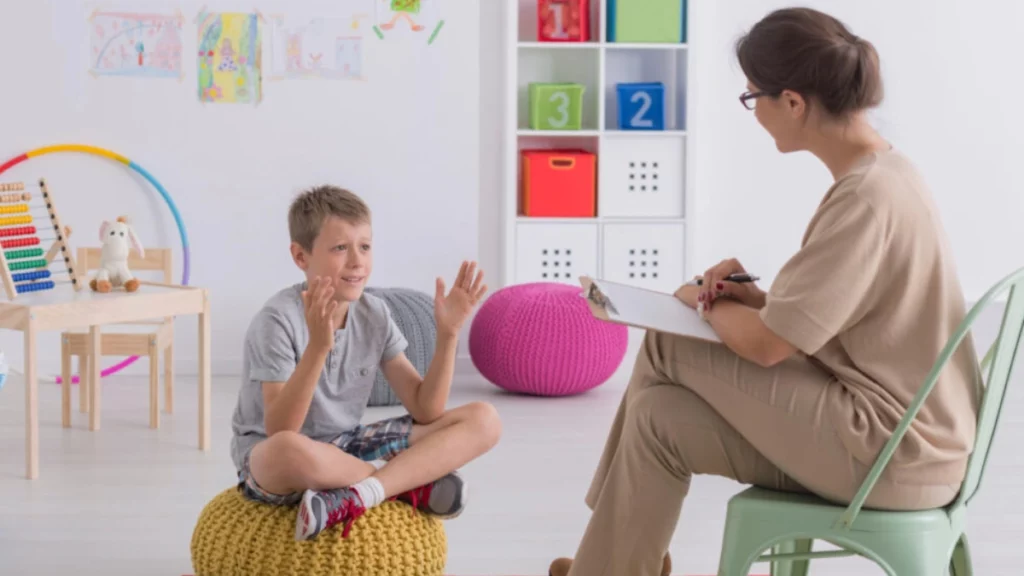

WISC-R is a comprehensive intelligence test used to measure the cognitive abilities of children between the ages of 6 and 16. This test aims to assess children’s verbal and performance skills separately and is often preferred for academic achievement, learning difficulties or monitoring cognitive development. The WISC-R measures a child’s intelligence level, problem-solving ability and logical thinking capacity. The test consists of various subtests, and each subtest reveals a child’s strengths and weaknesses in a particular cognitive area. In this way, psychologists can develop support plans in the areas where children need them. During the administration of the test, factors such as the child’s motivation, attention span and test anxiety can affect the results.
Analysing Academic Achievement in Children with the WISC-R Intelligence Test
The WISC-R intelligence test is a tool that assesses children’s cognitive abilities in detail and is effective especially in revealing the relationship between academic achievement and cognitive performance. The different subsections of the test measure a child’s verbal reasoning, logical thinking and problem-solving skills. In this way it becomes possible to determine in which areas they are strong and in which areas they need support. For example, while a child who scores high on the verbal subtests may be strong in vocabulary and expressive ability, a child who scores low on the performance subtests may need additional support in visual-spatial or logical thinking. The WISC-R results provide teachers and parents with important information about personalising a child’s education plan. Academic achievement is directly related not only to exam scores but also to a child’s cognitive capacity. The test offers the opportunity for early intervention in children with learning difficulties or attention problems. In addition, the data obtained with the WISC-R enable a child’s strengths to be supported and their weak areas to be developed. This test also guides psychologists in understanding a child’s motivation and learning style. Careful and correct administration of the test increases the reliability of the results obtained. Thus a child’s academic achievement goals can be set more realistically and in a personalised way.
WISC-R Subtests and Cognitive Areas
The WISC-R intelligence test consists of various subtests in order to understand children’s cognitive abilities in more detail. These subtests, by measuring a child’s both verbal and performance skills, reveal their strengths and areas open to development. The verbal subtests assess skills such as vocabulary, similarities, numerical reasoning and general knowledge. In this way, information is gained about the child’s use of language, logical thinking and conceptual abilities. The performance subtests, on the other hand, include tasks such as block design, picture completion, arrangements and object assembly. These tests measure a child’s visual-spatial perception, attention and problem-solving ability. For example, in the block design test the child creates a given shape using the provided blocks, and in this process spatial thinking skill is assessed. By bringing together the results of the subtests, a child’s intelligence profile is drawn up and it is determined in which areas support is needed. Thanks to the WISC-R subtests, children with learning difficulties, attention deficit or special education needs can be identified more accurately. This plays a critical role both in educational planning and in creating individual support strategies. In addition, the subtests, by also revealing a child’s strengths, contribute to the development of self-confidence.
Preparation Before the WISC-R Test and the Administration Process
The WISC-R test requires a certain preparation process so that accurate and reliable results can be obtained for the child. Before the test, it is important for the child to be in a comfortable and focused environment. The psychologist who will administer the test should explain the purpose and process of the test to both the child and the parents. This explanation prevents the child from feeling under pressure during the test and helps them display their natural performance. Before the day of the test, the child needs to be sufficiently rested and to have basic needs such as hunger and thirst met. During the test, attention span and motivation are factors that directly affect the results. The WISC-R is usually an administration lasting 60–90 minutes, and the different subtests are carried out one after another. For this reason, the psychologist makes the necessary arrangements to minimise distraction and to ensure that the test proceeds without interruption.
How Are WISC-R Test Results Interpreted?
The WISC-R test, while measuring a child’s cognitive abilities, produces scores that cover both the verbal and performance intelligence areas. The results are reported in the form of a child’s full-scale intelligence quotient (FSIQ) and subtest scores. While the full-scale intelligence score shows a child’s cognitive capacity relative to their peers, the subtest scores reveal strengths and areas open to development in particular areas. For example, a child whose verbal scores are high but whose performance scores are low may be strong in language and logical thinking but need support in visual-spatial or problem-solving skills. During the interpretation of the results, the behaviours the child displays during the test, their level of attention and their motivation are also taken into account. Scores alone may not reflect a child’s entire cognitive potential; therefore an online psychologist evaluates this data together with observations and educational reports. The WISC-R results are used in detecting learning difficulties, personalising education plans and developing special support programmes. In addition, the test results also serve as a guide for families. While a child’s strengths are supported, strategies can be developed for their weak areas to increase their academic and social success. The WISC-R test is not only a measurement of intelligence but also offers important information as a road map for a child’s cognitive development. It helps the child relax through conversation. During the administration of the test, observations are also recorded; the child’s behaviour, attention and motivation during the test play a critical role in the interpretation of the results.
Detecting Learning Difficulties with the WISC-R Test
The WISC-R test is a very effective tool for identifying learning difficulties in children. The test reveals, through a child’s intelligence profile and subtest results, in which cognitive areas they are weak. For example, a child who scores low on the verbal subtests may experience reading and comprehension difficulties; a child who scores low on the performance subtests may struggle with mathematical or visual-spatial problems. In this way, learning difficulties can be detected at an early stage and intervention plans can be created. The WISC-R test results give psychologists the opportunity to determine a child’s learning style and the support they need. Problems such as attention deficit, memory problems or logical thinking difficulties also emerge during the test. This information serves as a guide for teachers and parents; thus strategies can be developed that will increase a child’s academic achievement. In addition, in children whose learning difficulties are detected with the WISC-R test, personalised education plans and support programmes can be applied. This process, by increasing both a child’s self-confidence and motivation, makes the learning process more efficient. The WISC-R test is not only a measurement of intelligence but also a comprehensive guide that directs children’s academic and cognitive development.
The WISC-R Test and Its Use in Psychological Counselling
The WISC-R test is a tool frequently resorted to in psychological counselling to understand children’s cognitive and academic development. The intelligence profile and subtest data that the test provides help psychologists determine a child’s strengths and weaknesses. In the light of this information, cognitive and emotional support plans specific to children can be prepared. For example, while attention-enhancing techniques can be applied for a child with attention deficit, the learning motivation of a child with strong verbal abilities can be increased. The WISC-R test also plays a critical role in the early detection of learning difficulties. The child notices, according to the test results, in which areas they are having difficulty, and the psychological counsellor develops strategic interventions aimed at these areas. In addition, the test data is shared with families and supportive activities that can be applied at home are planned. In this way, the child can be more successful both at school and in social life. In the online or face-to-face psychological counselling process, the WISC-R test results form a reference point for monitoring children’s academic and emotional development. The administration of the test and the interpretation of the results require a professional approach. With child therapy, self-confidence and learning motivation are increased and children are enabled to reach their individual development goals.