
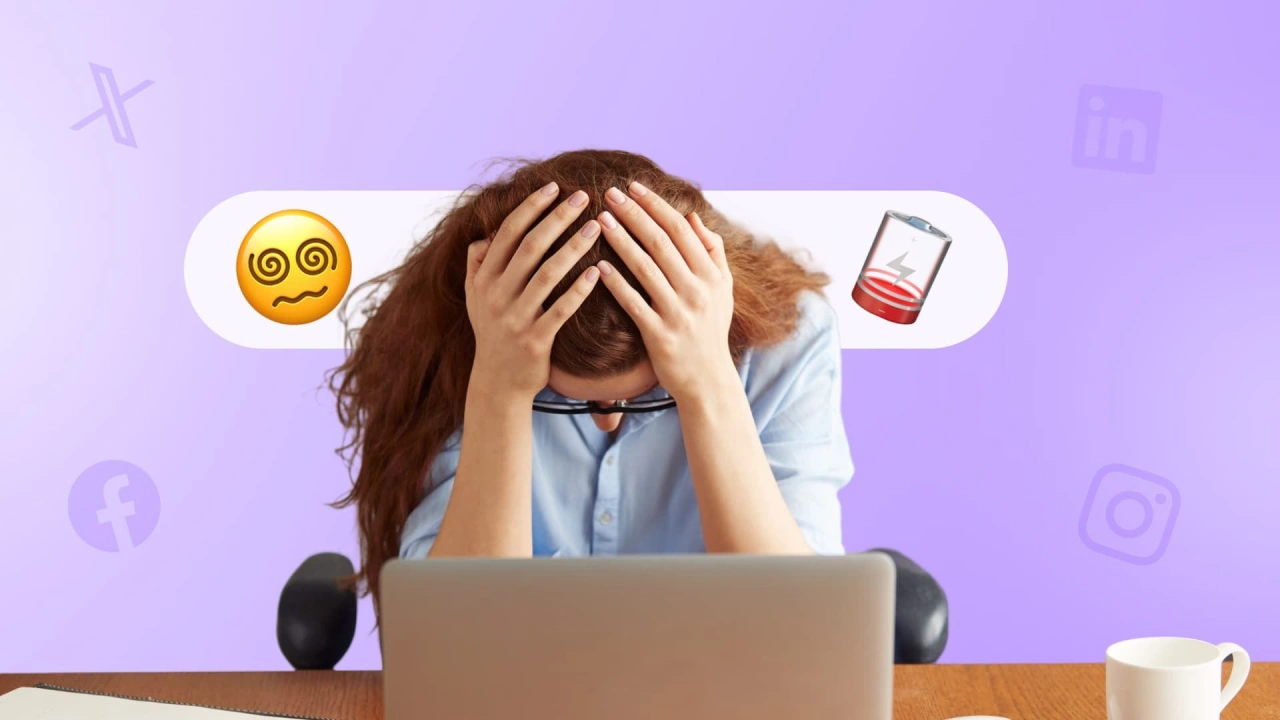
Social media burnout is an informal phrase describing mental fatigue, emotional overload, reduced interest and a desire to withdraw from social platforms. It is not a formal psychiatric diagnosis and has no agreed diagnostic criteria. Nevertheless, notifications, comparison, distressing news and pressure to remain continually available can create genuine strain.
The issue is not simply the number of hours spent on a screen. A person may use an app briefly but encounter intense conflict, performance pressure or threatening content. Somebody else may spend longer online and feel connected through creativity, learning or communication. Purpose, content and emotional effects matter alongside duration.
What are the signs of social media burnout?
Experiences vary, but it may be useful to review digital habits when several of these signs repeat and affect everyday life:
- Mental fatigue or emptiness after closing an app,
- Loss of interest in content that was previously enjoyable,
- Restlessness when notifications are not checked,
- Moving between applications without a clear purpose,
- Feeling inadequate after comparison with other people,
- Pressure to create content or remain visible,
- Anger and tension after online conflict,
- Checking a phone immediately before sleep and after waking,
- Difficulty concentrating and frequent task interruption,
- Wanting distance while returning automatically.
These signs do not establish a mental disorder. Insufficient sleep, work pressure, depression, anxiety, attention difficulties and medical conditions can produce similar fatigue. Symptoms extending beyond platform use require broader assessment.
Why can social media be exhausting?
A social feed has no natural endpoint. Unlike a newspaper or episode, it continually produces more material. Each post creates small choices: look, skip, like, reply or save. These uninterrupted decisions and rapid changes of subject place demands on attention.
Content also shifts quickly between emotional states. Within minutes, somebody may see a friend’s celebration, a disaster report, an advertisement and a humorous video. Before one response is processed, another begins. The result may be a general sense of saturation rather than one clear emotion.
Platforms make social comparison effortless. People tend to share selected achievements, flattering moments and finished outcomes. Comparing the full difficulty of one’s own life with another person’s edited public version can increase inadequacy. Knowing that posts are selective does not always remove their emotional effect.
Pressure to remain available
Read receipts, online status and expectations of rapid replies can reduce opportunities for rest. A person may feel socially on duty even when away from work or school. Group chats, work messages and notifications across platforms blur the boundaries of the day.
This pressure can be stronger for content creators. When likes, views and follower counts become the sole measure of creative value, each post turns into a performance test. Algorithm changes or reduced engagement may affect self-worth. Creative activity can become an exhausting requirement to remain visible.
Is it the same as doomscrolling?
Doomscrolling refers to repeatedly following negative and threatening news while finding it difficult to stop. A person may seek information to feel prepared but become more anxious and helpless. Social media burnout is broader and includes comparison, notifications, content creation and communication demands.
Doomscrolling can contribute to social media fatigue, but it is not present in every case. Someone who avoids news may still be exhausted by messaging, advertising or self-presentation.
How is it different from occupational burnout?
Burnout is an occupational phenomenon associated with chronic workplace stress that has not been successfully managed. It may involve exhaustion, mental distance from work and reduced professional efficacy. Social media burnout is not a formal health classification and describes a person’s relationship with digital platforms.
The experiences can interact. Somebody required to use social media professionally may experience workplace stress and digital fatigue together. Reducing social media alone, however, will not resolve burnout caused by working conditions. Identifying the primary source is important.
Effects on sleep and attention
Night-time notifications and prolonged scrolling in bed may delay sleep. In addition to screen exposure, emotionally stimulating content can make it harder for the mind to settle. Reduced sleep then makes sustained attention more difficult the following day, increasing the temptation to seek brief relief through the phone.
Frequent notifications repeatedly interrupt tasks. Even a brief glance requires effort to return to the original activity. This can strengthen the feeling, “I was busy all day but completed nothing.”
How can healthy digital boundaries be established?
Deleting every account or giving up a phone is neither necessary nor sustainable for everyone. A more useful approach distinguishes valuable use from automatic use. For one week, briefly note when an application is opened, what you felt beforehand and how your mood changed afterwards.
Helpful steps may include:
- Turning off non-essential notifications,
- Removing applications from the home screen,
- Establishing specific times for checking,
- Keeping the first and final hour of the day screen-free,
- Muting accounts that repeatedly create inadequacy or anger,
- Choosing limited, reliable news sources,
- Using one screen at a time,
- Scheduling offline rest and relationship time.
Boundaries are better understood as a budget for attention and energy than as punishment. One day outside the plan is not failure. Identifying what triggered the return to an old habit can make the plan more realistic.
How can a digital break be planned?
Instead of declaring “I will never use it again,” try a limited experiment. A person might keep the phone outside the bedroom for a week or close applications after a set evening time. Before beginning, tell close contacts how to reach you and choose a separate channel for essential work.
It is also important to plan how the released time will be used. Removing social media may reveal loneliness or boredom. Without concrete alternatives such as walking, reading, meeting someone, cooking or creative activity, automatic return is likely.
At the end of the break, review sleep, attention, mood and relationships—not only screen time. Then decide consciously which applications, accounts and periods deserve a place in daily life.
When may professional support help?
Support may be useful when social media substantially affects work, study, sleep or relationships; attempts to reduce use repeatedly fail; or platforms intensify severe anxiety, depressive symptoms or body-image concerns.
Therapy does not focus only on reducing screen time. It examines the need served by use. Somebody may reach for the phone because of loneliness, fear of failure, avoidance or a continuing need for approval. Digital boundaries become more sustainable when healthier ways of meeting that need are developed.
Online therapy may be accessible, though it also takes place through a screen. Digital load and the need for off-screen recovery can therefore be planned around sessions. A balanced relationship with social media does not require rejecting technology; it means choosing when and why attention is given to it.