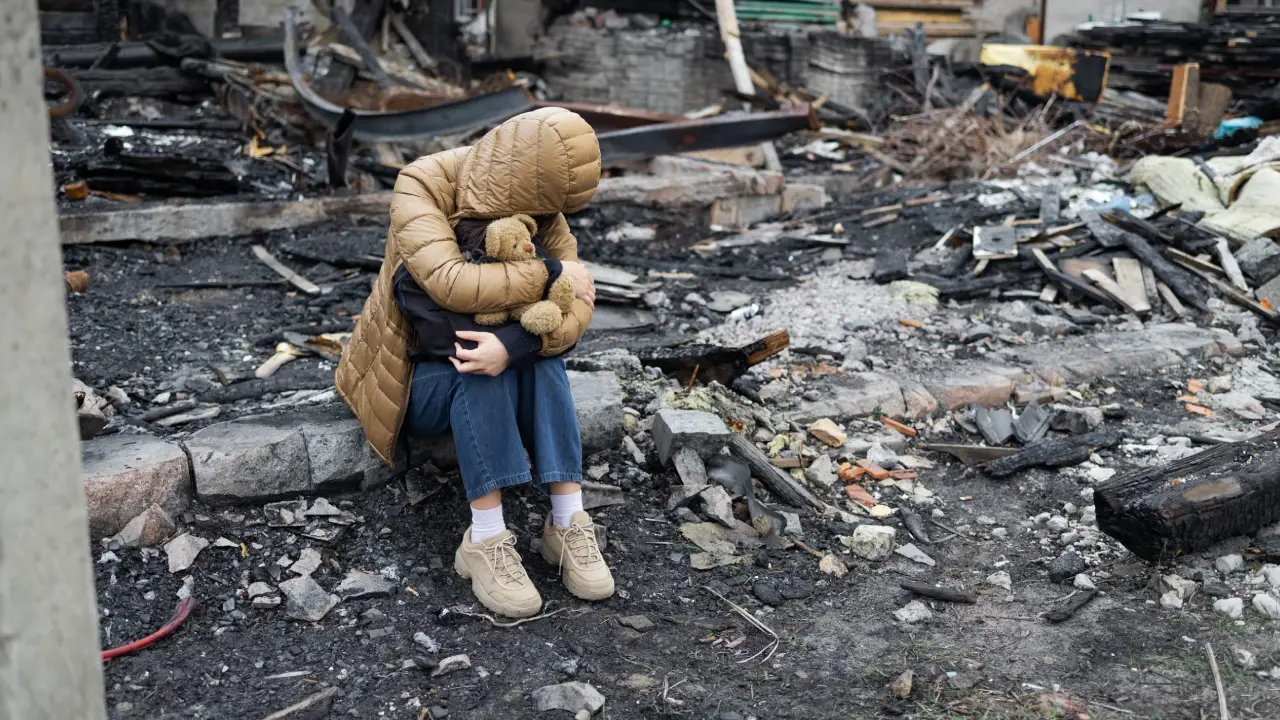
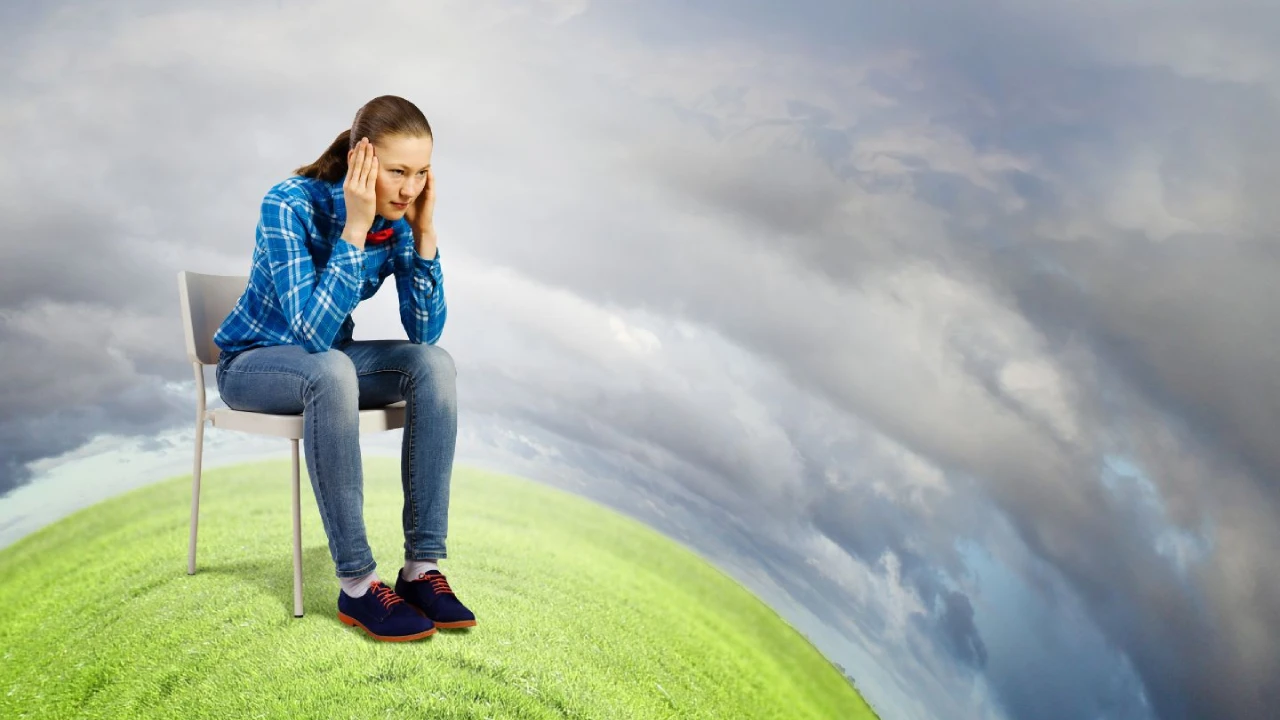
News about wildfires, drought, extreme heat, flooding and species loss can create intense concern about the future. People may worry not only about their own safety but also about the world children will inherit, unequal exposure to environmental harm and changes that may not be reversible. This emotional response is commonly called eco-anxiety, climate anxiety or ecological anxiety.
Eco-anxiety is not an official psychiatric diagnosis. It is a broad term for fear, sadness, anger, guilt and helplessness connected with real environmental threats. Climate concern should therefore not automatically be treated as illness. Anxiety can signal that something deeply valued is under threat and can motivate meaningful action. Support may be needed when the thoughts dominate daily life, interfere with sleep and functioning or leave a person feeling completely paralysed.
What are the signs of eco-anxiety?
Eco-anxiety does not look the same for everyone. One person may follow information constantly, while another avoids the subject entirely. Common experiences include:
- Being unable to stop thinking about climate and environmental news
- Repeatedly imagining catastrophic future scenarios
- Difficulty sleeping or dreams about environmental disasters
- Anger, hopelessness, guilt or helplessness
- Constantly questioning personal consumption choices
- Evaluating decisions about children, location or career only through climate fear
- Compulsively checking news and social media
- Avoiding every conversation about environmental issues
- Physical tension, a racing heart, digestive discomfort or poor concentration
- Believing that individual or collective effort has no meaning
These responses may occur occasionally without becoming a disorder. What matters is how long they continue and how much they affect relationships, education, employment, sleep and basic self-care.
Why does eco-anxiety develop?
Climate change is a large-scale, uncertain threat that may appear beyond any one person’s control. The brain is better suited to responding to concrete dangers with immediate solutions. A problem unfolding across decades, with different effects in different places and no simple endpoint, can leave the alarm system repeatedly activated.
For people who have experienced an environmental disaster directly, distress may not be limited to the future. Wildfire, flooding, drought, displacement or economic loss can have traumatic consequences. Others may experience indirect stress through repeated exposure to news, scientific projections and visible changes in their surroundings. Both experiences are real, though the support required may differ.
Young people and young adults may feel particular pressure because they expect much of their lives to unfold under increasing climate effects. A belief that they have little influence over decisions shaping that future can create anger and distrust. For people living in highly exposed regions or with fewer financial resources, climate anxiety may occur alongside immediate concerns about safety, housing, food and income.
Climate distress is also shaped by identity, culture and connection to place. Communities whose livelihoods, traditions or spiritual life are closely tied to land and seasons may experience environmental change as a threat to continuity and belonging, not merely as an abstract future risk.
Are eco-anxiety and ecological grief the same?
Eco-anxiety usually refers to fear and worry about environmental harm that is happening or may happen. Ecological grief is sadness in response to the loss of a loved landscape, species, seasonal pattern or way of life. The term solastalgia describes distress when a person’s home environment changes so much that they no longer feel at home while remaining in the same place.
These reactions can coexist. After a wildfire, someone may grieve the damaged landscape while fearing future fires. Naming the dominant emotion can clarify what is needed: immediate safety, room to grieve, social support, reliable information or a path toward action.
How do news and social media affect climate anxiety?
Information is necessary for preparation and participation. Continuous exposure to disaster images throughout the day, however, can give the nervous system the impression that the threat is immediate and constantly present. Algorithms may repeatedly show content that provokes strong emotional reactions, narrowing a person’s view of reality.
Someone may continue refreshing the screen with the belief that one more article will provide control. Instead of reducing uncertainty, each new item can increase fear. If checking negative online news has become difficult to stop, the limits described in our guide to doomscrolling may help.
Reducing exposure does not require ignoring scientific evidence. It means choosing when, how often and from which sources to receive information so that it can be processed rather than simply accumulated.
When is climate anxiety useful, and when is it overwhelming?
Useful anxiety supports awareness, preparation and action consistent with a person’s values. Someone can learn from reliable sources, choose a realistic step and then return attention to ordinary life. Overwhelming anxiety does not produce new information. The same scenarios repeat, information seeking escalates or the person stops acting because no action seems sufficient.
The question is not whether somebody cares too much about climate change. It is whether the emotional response allows flexibility. An emotion can accurately signal a real problem while still needing regulation to protect health and sustained engagement.
How to cope with eco-anxiety
Name the emotion without dismissing it
Telling yourself not to think about climate change may not reduce distress. Identify whether fear, anger, sadness, guilt, betrayal or disappointment is most prominent. Naming the emotion turns a general state of alarm into a more understandable experience.
Put boundaries around information
Choose a small number of reliable sources and check them at planned times. Avoid beginning and ending the day with climate news if it disrupts sleep or mood. Boundaries are not denial; they create enough psychological space to understand and use information.
Separate control, influence and concern
Divide a page into three areas: what you control, what you can influence and what lies outside your control. Household choices may fall into the first area, joining a local initiative into the second, and the entirety of global policy into the third. Treating every outcome as a personal responsibility is neither accurate nor sustainable.
Choose one sustainable action
Trying to change every part of life at once can produce exhaustion. Select an action aligned with your values, such as improving household energy use, joining a local group, supporting credible science communication or preparing for regional hazards. A regular, manageable contribution is often more sustainable than a brief period of intense effort.
Avoid turning action into a purity test
No individual can live in a modern system with no environmental impact. Treating every purchase or journey as a moral examination can increase guilt and rigidity. Personal behaviour matters, but infrastructure, institutions and policy matter too. The aim is not personal perfection; it is consistent and meaningful participation within actual circumstances.
Connect with other people
Talking with people who share similar concerns can reduce isolation. Community can provide emotional support, divide tasks and restore a sense of collective effect. Choose spaces that balance emotion, evidence, rest and practical response; groups that discuss catastrophe continuously without recovery may intensify distress.
Maintain a relationship with nature beyond loss
Walking in a park, growing plants or observing a local habitat does not solve climate change. It can preserve a living connection with what a person wants to protect. Allowing room for curiosity, beauty and enjoyment—rather than treating every encounter with nature as damage monitoring—may support psychological resilience.
Return attention to the present
Anxiety can make possibilities decades away feel as if they are happening now. Notice the feet on the ground, slow the exhale, name sounds in the environment and return to the next concrete task. If future scenarios repeatedly take over the present, the methods in our article on anticipatory anxiety may also be useful.
Do not confuse rest with indifference
Someone who cares deeply may feel guilty for taking a break. Constant alarm, however, makes long-term participation harder. Sleep, relationships, leisure and everyday pleasure are not betrayals of the cause. They are resources that make sustained involvement possible.
Preserve more than one source of identity
Climate concern may be central to a person’s values without becoming the whole identity. Work, friendship, family, creativity, movement and humour continue to matter. Multiple sources of meaning protect against the feeling that every day must be evaluated only by environmental impact.
How should adults talk to children about climate change?
Offer honest, age-appropriate and proportionate information. Rather than avoiding questions or promising that nothing bad will happen, explain that adults, scientists and communities are working on solutions. Listen to the child’s feelings and choose small, concrete family actions.
Children should not be made responsible for calming adult anxiety. Limit repeated exposure to disaster footage and make space for ordinary play and development. Hope does not require denying the problem; it means recognising the possibility of action, adaptation and solidarity under uncertain conditions.
How can the helplessness cycle be interrupted?
Individual effort can appear tiny beside a global problem. The thought “Nothing I do will matter” may lead someone to withdraw even from areas they can influence. This pattern can resemble learned helplessness.
Effectiveness does not have to mean solving the global crisis alone. Local preparedness, voting, professional contribution, mutual aid and sharing accurate information are also forms of influence. Inability to control the entire outcome does not mean having no effect at all.
It can help to define success through participation rather than certainty. The results of collective action may be delayed, incomplete or difficult to measure. A values-consistent action can still be meaningful even when it does not immediately remove fear.
When should you seek professional support?
Psychological support may be helpful if distress significantly affects sleep, work, education or relationships for several weeks, or if panic symptoms, severe hopelessness or depressed mood are present. People directly affected by disaster may also need assessment for trauma-related symptoms and practical support related to safety and loss.
Therapy should not minimise the reality of climate change. It can help make emotions more manageable, regulate information exposure, examine helplessness and build action that is consistent with personal values. The goal of coping with eco-anxiety is not to become indifferent. It is to protect mental health while maintaining a meaningful relationship with the world a person wants to preserve.