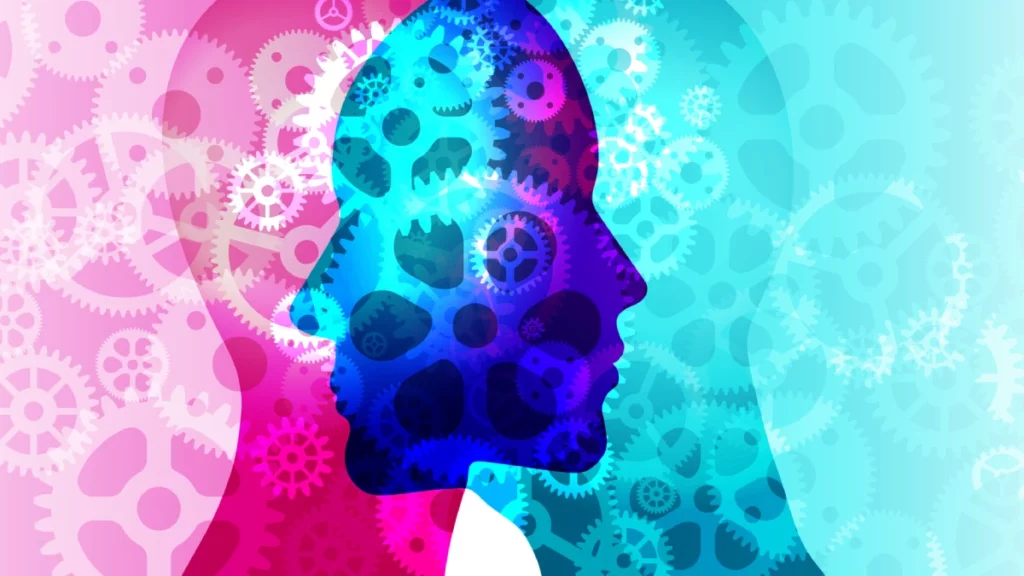

Within us there is a force we are not aware of: the subconscious. The subconscious is defined as an area that holds the thoughts, emotions and experiences that take place in the part of our mind we are not aware of. Many of the behaviours we perform in our daily lives — for example, our habits and our automatic reactions — emerge without conscious thought and are in fact shaped by the guidance of our subconscious. This deep layer contains not only our past experiences but also our values, our belief system and our emotional reactions. For example, a belief coming from childhood may still be influencing our decisions in adulthood without our being aware of it. Understanding the subconscious opens a door to changing not only our own behaviour but also the way we cope with the difficulties we encounter in life.
What Is the Subconscious and How Does It Work?
The subconscious is the invisible but most influential layer of our mind. A large part of the decisions we make, the reactions we show and the behaviours we repeat without being aware of them in daily life takes shape in this deep mental area. While our conscious mind works with logic and analysis, the subconscious moves with emotions, habits and automatic reactions. In other words, it is often the subconscious mind that is at the wheel of our lives. The subconscious is fed by past experiences, sentences we heard in childhood, traumatic experiences and frequently repeated thoughts. For example, a belief such as “I must be successful or I won’t be loved” develops in childhood and, in adulthood, guides many decisions without our being aware of it. For this reason, the subconscious is a force that shapes not only the past but also the present and the future. The mind works like a computer; the subconscious, in turn, is that computer’s background software. If we want to change a behaviour, we need to descend not only to the symptoms but to the subconscious codes that guide that behaviour. This is generally possible through awareness, therapy or subconscious-work techniques. The subconscious is active and recording at every moment; it processes information even while we sleep. That is why programming it correctly directly affects our quality of life. Our thoughts, our emotions and our habits are rooted in the subconscious — therefore change begins in the subconscious.
What Are the Effects of the Subconscious on the Conscious Mind?
The subconscious, just like an invisible guide, directs our conscious thoughts and behaviours. A large part of the decisions we make during the day, the emotions we feel and even the relationships we form is under the influence of this invisible area. Although the mind appears logical and controlled on the surface, deep down subconscious beliefs work silently and often push us into certain patterns without our being aware of it. For example, an individual who developed the belief “if I make a mistake I won’t be loved” in childhood may display perfectionist behaviours in adulthood. This is not a conscious choice but a form of defence created by the subconscious. Similarly, the thought “I am not enough” can lead a person to avoid taking risks and to remain in the background in relationships. In other words, subconscious belief systems determine the direction of a person’s life. The subconscious is also in direct communication with the body. Emotional pressures, suppressed fears or stressful thoughts can appear in the body as physical symptoms such as tension, stomach discomfort or headache. For this reason, gaining mental awareness involves observing not only thoughts but also bodily reactions. The first step in transforming the effects of the subconscious is awareness. Understanding which thoughts and emotions guide us is the path to inner freedom. As this awareness is developed during the therapy process, the person learns to act with conscious choices rather than automatic reactions.
Subconscious Thought Patterns and Automatic Behaviours
The subconscious is an archive of past experiences, beliefs and learned emotional reactions. Every record in this archive shapes our present-day automatic behaviours. For example, an individual who was constantly criticised in childhood may become overly sensitive to criticism in adulthood. This reaction is not a conscious decision; it is the subconscious’s reflex of “self-protection.” Subconscious patterns are generally noticed through recurring thoughts. Expressions such as “I can’t do it anyway” or “no one really values me” reflect the subconscious beliefs that have taken root in the individual’s inner world. When these beliefs are not questioned, the person experiences the same kinds of relationships, makes similar mistakes or suppresses their own potential. For this reason, during the cognitive behavioural therapy process, automatic thoughts are examined together with the patient. The person first becomes aware of these thoughts, then observes which emotion and behaviour they trigger. Afterwards, these patterns are transformed through the method of “evidence-based thinking.” For example, in place of the thought “I’m going to fail,” realistic and functional thoughts such as “I have managed situations I struggled with before, and this too can develop over time” are put in place. In this way, the person enters a new learning process on both a mental and an emotional level. This transformation can take time, because subconscious habits are shaped through repetition. However, with regular awareness work and therapy support, the individual steps into a life directed by their own choices rather than a life ruled by the past.
Clearing the Subconscious and Awareness Work
Clearing the subconscious is the process of noticing and transforming the negative beliefs, suppressed emotions and learned fears that have accumulated in the past. The human mind, just like a computer, records the information it received in the past and shapes future behaviour accordingly. For this reason, if there are records in a person’s subconscious such as “I am inadequate,” “I am not loved,” or “I will lose control,” their life too is shaped, without their being aware of it, in line with these beliefs. Awareness work is one of the healthiest ways of reaching the subconscious. Methods such as meditation, breathing exercises, keeping an emotion journal and observing thoughts without judgement reduce the noise on the surface of the mind and allow one to notice the thoughts in the lower layer. As the individual listens to their own inner dialogues, they begin to understand which beliefs are limiting them. In the Cognitive Behavioural Therapy approach, awareness is supported by the techniques of catching automatic thoughts and reality testing. When the person notices the thought “I am worthless,” they question the basis of this thought under the guidance of the therapist. Every negative belief that is not supported by real evidence is transformed through the process of restructuring. Over time, the individual learns to act with the awareness of the present moment rather than with reactions that carry traces of the past. In this way, it becomes possible to re-establish inner balance and to programme the subconscious in a positive direction.
How Do Subconscious Fears Form?
Subconscious fears generally form through events experienced in childhood, environmental conditions and parental attitudes. When a child feels threat or rejection in a particular situation, their brain records that moment as “danger.” This record, in later years when a similar situation is encountered, comes into play as an automatic fear response. For example, an individual who felt shame when criticised as a child may feel intense anxiety when speaking in public in adulthood. Even if they are not aware of it at that moment, the subconscious reactivates the emotional memory from the past. In other words, the person reacts not to today’s event but to the echo of the painful emotion they experienced in the past. In this process, the brain acts with a survival reflex. Its aim is to protect the individual; however, because it cannot distinguish the past from the present, it can lower the person’s quality of life. Constant thoughts such as “what if I’m rejected?” or “what if I make a mistake?” are the mental reflections of the fears in the subconscious. In the CBT approach, to resolve these fears, the aims are noticing automatic thoughts, re-interpreting emotional records and creating new learning through behavioural experiences. When the origin of the fears is noticed, the person begins to act with the reality of the present moment rather than with reactions coming from the past.
How Is the Subconscious Cleared?
Clearing the subconscious is a process that includes the steps of mental awareness, emotional release and behavioural restructuring. The aim is to transform the negative belief patterns that formed in the past without one’s awareness and to put healthier ways of thinking in their place. The first step is awareness. By observing the recurring problems in their life, the person begins to discover the beliefs that lie beneath these cycles. Questions such as “Why do I always have the same type of relationships?” or “Why does my fear of failure not pass?” are doors that open onto subconscious records. At this stage, keeping a thought journal and writing down the automatic thoughts that are noticed is highly effective. The second step is emotional awareness and expression. Suppressed emotions create an intense build-up of energy in the subconscious. For this reason, when the person expresses emotions such as the anger, fear or guilt they suppressed in the past in a safe environment — for example, during the therapy process — these burdens begin to dissolve. The third step is cognitive restructuring. As in CBT techniques, the person tests their negative beliefs with questions such as “is there evidence?” or “does this really always happen?” In this way, mental distortions are noticed, and more balanced, realistic thoughts are put in their place. Clearing the subconscious is not a miraculous process that happens all at once, but a transformation that requires regular awareness and inner work. However, as the person learns how their mind works, they begin to break free from the burdens of the past.
How Do You Communicate with the Subconscious?
Communicating with the subconscious means establishing a mindful contact with the deep layers of the mind. This communication takes place not directly through logic, but through symbols, emotions and recurring thought patterns. This is because the subconscious speaks through emotional experiences rather than words. The first way of this communication is awareness of thoughts and emotions. The inner voices repeated during the day are the messages of the subconscious. When inner expressions such as “You’ll fail again” or “No one loves you” are noticed, the mind is in fact reminding the person of the beliefs they acquired in the past. Observing these expressions without judgement is the foundation of accessing the subconscious. The second method is meditation and breathing exercises. Taking deep breaths increases inner silence by reducing mental noise. In this silence, suppressed emotions and needs rise to the surface. Sometimes even focusing on your body and your breath for just a few minutes allows you to notice the messages of the subconscious. Another powerful method is suggestion work and affirmation sentences. The subconscious learns through repetition. Affirmations such as “I am valuable” or “I accept myself as I am,” when repeated regularly, allow positive beliefs to replace negative records. In the CBT process, this awareness is supported by cognitive restructuring techniques. In other words, the person does not only make affirmations but also looks for evidence that these affirmations are based on reality. In this way, a lasting inner transformation takes place.
How Are Negative Beliefs in the Subconscious Transformed?
Transforming negative beliefs in the subconscious is a deep process of change that begins with mental awareness and is reinforced through behavioural practices. These beliefs are generally shaped in childhood; parents’ statements, the traumas experienced or repeated negative experiences form the basis of patterns such as “I am not enough” or “I don’t deserve to be loved.” The first step of transformation is noticing the belief. The person begins by observing which thoughts limit them. For example, when the thought “I can never succeed” arises, this belief needs to be questioned: Has it really always been this way? Such questioning is supported by CBT’s techniques of “gathering evidence” and “noticing cognitive distortions.” The second step is generating alternative thoughts. The person puts more realistic and supportive sentences in place of the old beliefs: “Success may take time, but as I make an effort I move forward.” These sentences are not merely words; they are the beginning of a new mental programme. The third step is creating behavioural evidence. The subconscious is convinced through experience. In other words, as the person takes small but concrete steps that support their new belief (for example, giving a presentation, asking for feedback, trying a new skill), the effect of the old records decreases. In this process of transformation, regular awareness, patience and consistency are essential. Once the subconscious has been transformed, the person begins to act with the consciousness of today rather than with the automatic reactions of the past. This is the beginning of true liberation.
Why Is Clearing the Subconscious Important?
Clearing the subconscious is the process of transforming the negative beliefs, suppressed emotions and automatic reactions that a person has accumulated in the past without being aware of them. When this work is not done, even though the individual consciously wants to build a different life, their subconscious records continue to drag them back into old cycles. The answer to questions such as “Why do I always have the same kinds of relationships?” or “Why do I repeat the same mistakes?” often lies here. The mind works like the small visible part of an iceberg. The conscious thoughts at the top affect only about ten per cent of behaviour. The remaining part is governed by subconscious programmes that have been shaped from childhood onward. For this reason, the person may, without being aware of it, display behaviours that sabotage themselves — for example, being afraid of success, feeling guilt about being happy, or withdrawing in close relationships. Clearing the subconscious makes it possible to notice these cycles and rewrite them. Awareness work, meditation, breathing exercises, cognitive behavioural therapy techniques and suggestion practices create a “reprogramming” effect in the deep layers of the mind. In place of the fear-based thoughts learned in the past, the person develops beliefs based on self-acceptance, trust and balance. In the end, the individual ceases to be a passive spectator of their own life; they become a self that makes conscious choices, manages their emotions and acts with inner peace.
Transformation Through Subconscious Awareness: Rediscover Yourself
Subconscious awareness opens the door to living life through conscious choices rather than automatic reactions. When a person begins to observe their thoughts and emotions, they notice the patterns coming from the past and remember their own inner strength once again. This awareness is the first step of transformation. Rediscovering yourself is not about rejecting the past, but about understanding its influence over you and learning to manage it. The fears learned in childhood, feelings of guilt or beliefs such as “I am inadequate” can create invisible obstacles in every area of life. However, when a person descends to the roots of these beliefs and begins to transform them, they become the active creator of their own life. Cognitive Behavioural Therapy places this process on a scientific foundation. Noticing automatic thoughts, carrying out reality tests and planning steps of behavioural change are the building blocks of mental transformation. Over time, the person develops a more compassionate, balanced and steady perspective towards themselves. If you want to break free from the burdens of the past and regain your inner peace and balance, a process of professional support makes this journey much safer. In the online therapy sessions conducted with Psychologist Nilay Özkan, subconscious awareness, emotional balance and self-confidence can be worked on in depth. Now you too can take a step towards reprogramming your mind, getting to know yourself and building a more balanced life. Get in touch to book an online therapy appointment.